
Rubber does not resist a load the way concrete does. It deforms, spreads the pressure over a wider footprint, and springs back. Gauge decides how much room it has to do that before the animal is effectively standing on the slab again.
15–17 mm — cubicles and walk lanes
Enough deflection to take the ring out of concrete and give grip under slurry, without raising the floor so much that scrapers catch the edge. This is the working gauge for cubicle beds, walk lanes and milking parlours, and it is where most dairy orders land.
18 mm — puzzle-edge stall tiles
The stall tile is 18 mm because it has to interlock. A thinner tile flexes at the joint and the teeth lift; a thicker one is heavy enough that one person cannot reposition it alone. At 18 mm a 1160 × 775 mm tile is a two-hand lift and the joints stay shut under a barrow.
24 mm — standing areas and horse boxes
Where an animal stands still for hours, or a shod hoof strikes the same square repeatedly, 24 mm is the honest answer. It is also the gauge to specify under a bubble top, because the cushioning comes from the void pattern underneath and it needs the depth to work.
- Wet floors: the base pattern matters more than the gauge — stud and open-channel bases clear liquid, flat bases trap it.
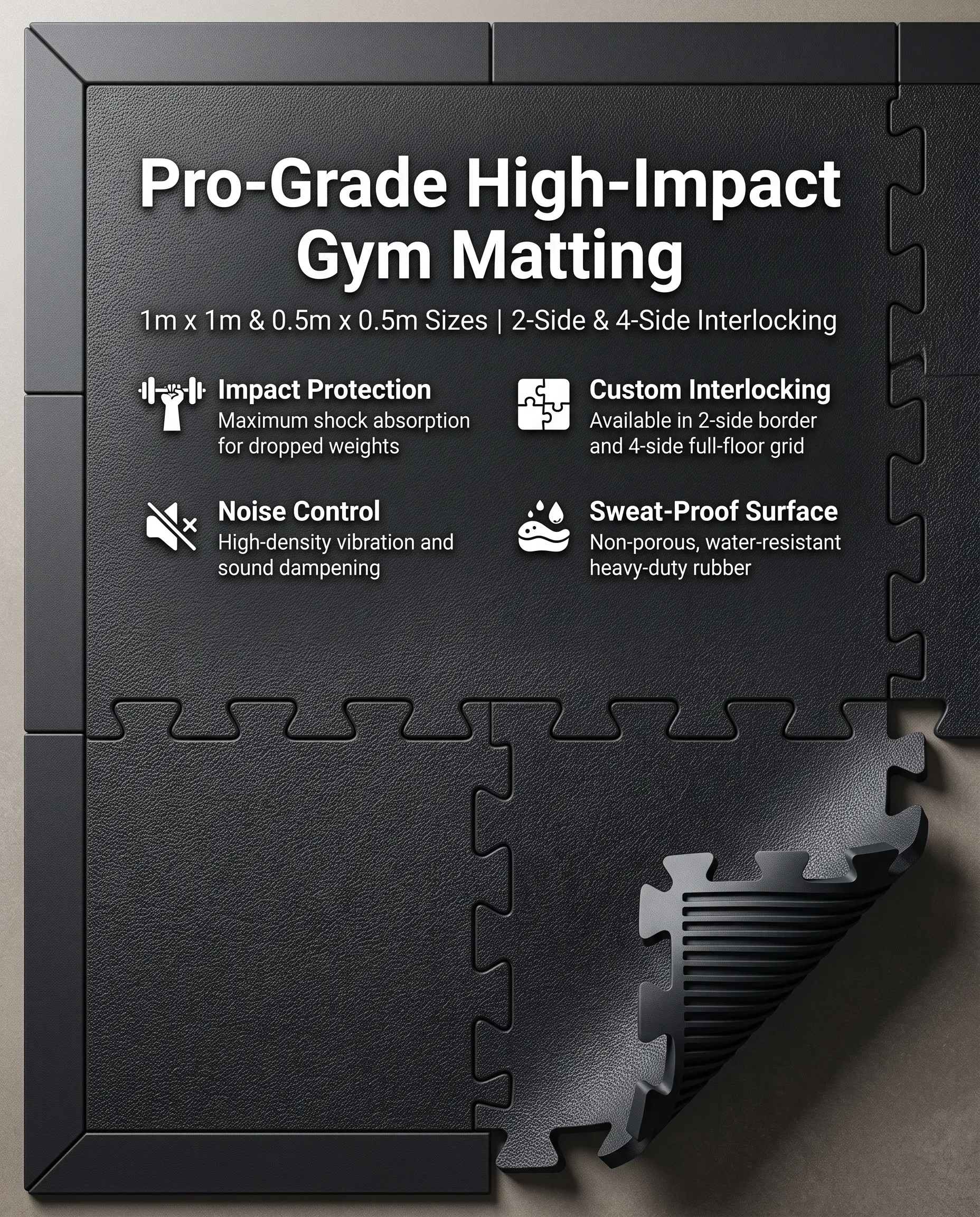
- Gym and plant rooms: 15–20 mm recycled SBR tile, chosen for impact absorption and noise rather than animal comfort.
- Never drill a mat to help it drain. If liquid is sitting, the slab has stopped falling to the channel.
If you are unsure between two gauges, send the bay dimensions and what stands on them. Going up a gauge costs less than replacing a floor that was never thick enough.