
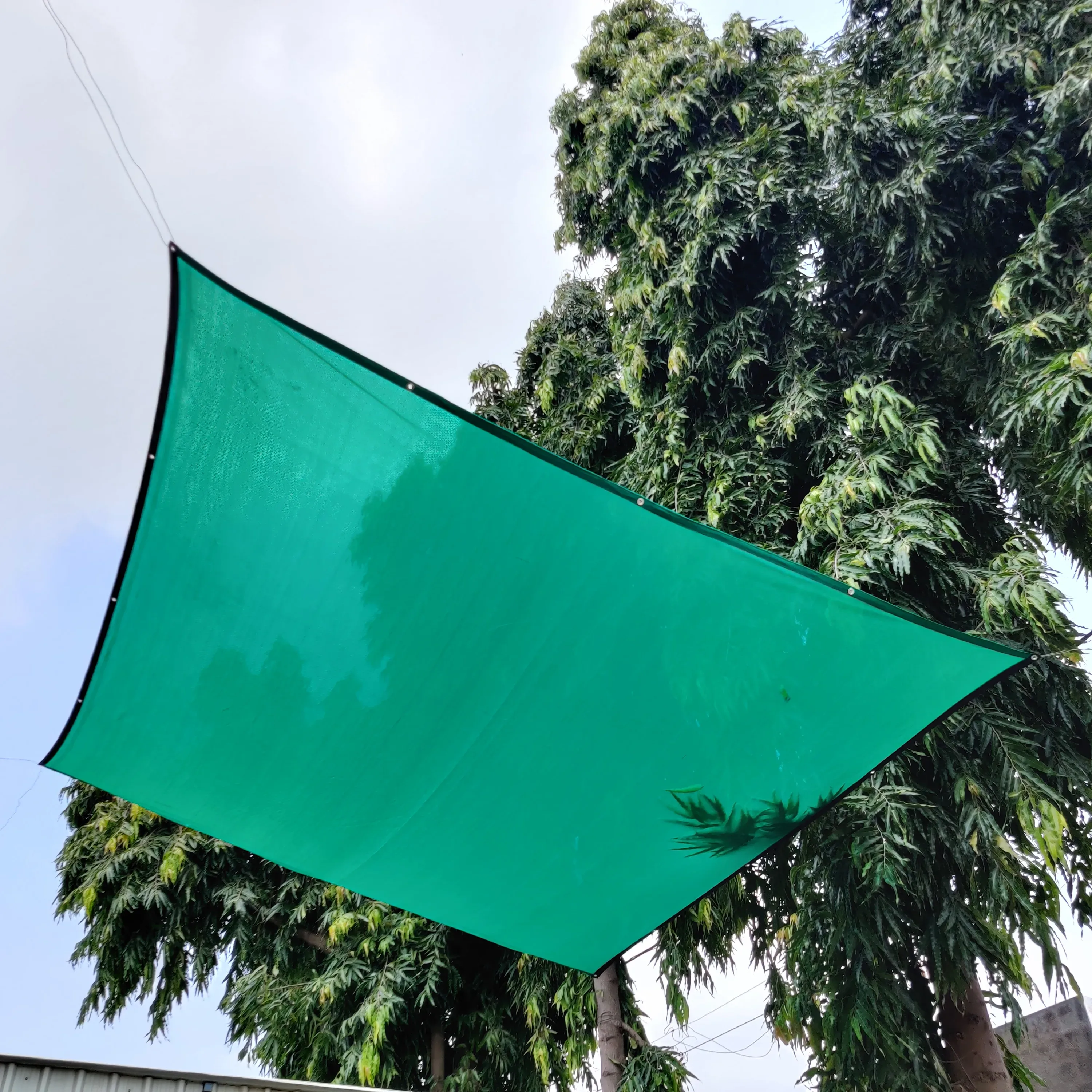
A shade factor is not a comfort setting — it is a light budget. Every percentage point you add is light the crop underneath will never get back, and every point you leave off is heat the structure has to carry through the worst fortnight of the summer. Pick it for the hottest week and the crop spends nine months in a gloom it did not need; pick it for the average and you will be out there in May throwing a second net over the first.
Start from the crop, not the weather
Leafy greens, nursery benches and propagation runs sit comfortably at 50–60%. Tomato, pepper and cucumber tunnels want 30–40% in temperate summers — enough to take the edge off the midday load without slowing fruit set. Orchids, ferns and shade houses go to 75%, and livestock pens are usually happier there too. Below 20% you are no longer buying shade; you are buying bird and insect exclusion, and the mesh count matters more than the percentage.
Then correct for your structure
A flat, tensioned net over an open bed delivers close to its rated factor. The same cloth on a curved tunnel loses several points at the shoulders and gains them back at the crown, so the reading under the plants is never uniform. If the structure is tall enough for air to move under it, you can usually drop a step; if it is a low tunnel with still air, hold the higher factor and open the ends instead.
The percentage on the roll is measured flat, in a lab. Your crop is under a curve, in Gujarat.
Two nets beat one compromise
Where a season swings hard — hail in one month, full sun two months later — a lighter permanent net plus a removable second layer usually costs less over a decade than a heavy net that is wrong for half the year. Both layers share the same clip-and-wire fixing at 500 mm centres, so the second one goes on in an afternoon and comes off just as fast.
Send us the span, the crop and the month you are most worried about, and the trade desk will come back with a roll schedule rather than a percentage.